中文


By Chen Yuehan
China can help shape a new era of ocean governance through its scientific capabilities, technological innovation and international influence, said former Costa Rican President Jose Maria Figueres in Xiamen, east China's Fujian province, on Nov. 5.
Science-based decision-making and international cooperation, he said, can help bridge geopolitical differences and secure a sustainable future for the ocean.
Figueres made the remarks at the 2026 World Ocean Week in Xiamen, an event focused on marine biodiversity conservation, ecosystem restoration and sustainable coastal development. It brings together Chinese and international experts for dialogue on ocean governance.
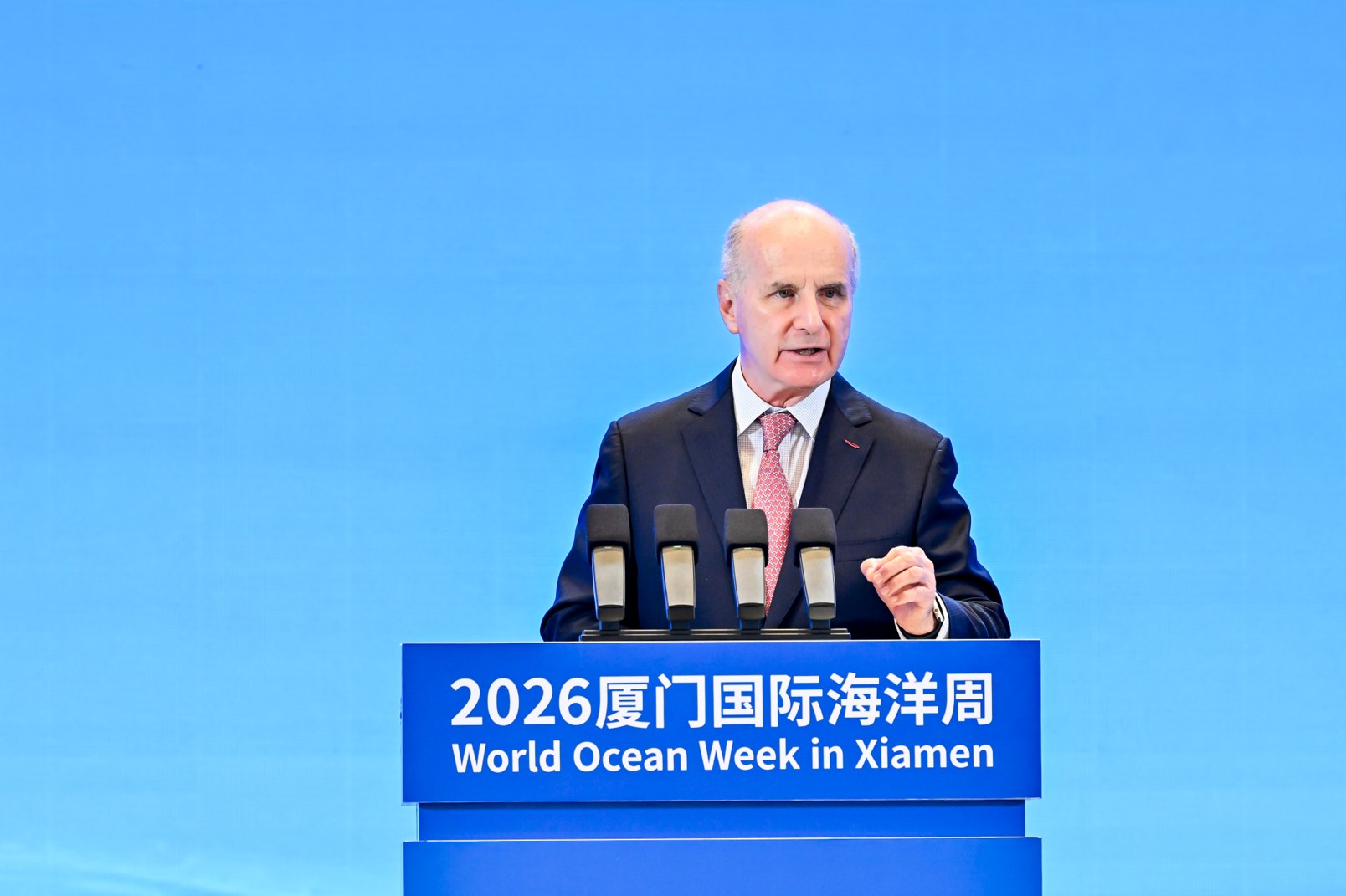
Former Costa Rican President Jose Maria Figueres delivers a keynote speech at the opening ceremony of the 2026 World Ocean Week in Xiamen, east China's Fujian province, on Nov. 5, 2026. [Photo courtesy of the 2026 World Ocean Week]
"There is only one global ocean," Figueres said. "Its future is our shared responsibility." He said ocean protection and human prosperity must go hand in hand.
Figueres spoke highly of Xi Jinping Thought on Ecological Civilization, which recognizes both the interdependence of humanity and nature and the economic value of healthy ecosystems. He said these principles could guide broader international cooperation on ocean protection.
In an interview, he cited China's role in securing the Kunming-Montreal Global Biodiversity Framework as a practical example of leadership through international cooperation. He also pointed to China's Ecological and Environmental Code and its proposal for a marine protected area in East Antarctica's Cosmonauts Sea as evidence of its commitment to ecological protection.

Guests pose for a photo with China's manned deep-sea submersible Jiaolong at the 2026 World Ocean Week in Xiamen, east China's Fujian province, on Nov. 5, 2026. [Photo courtesy of the 2026 World Ocean Week]
Figueres said China had also worked with other developing countries on joint research and knowledge sharing, helping those with fewer scientific and financial resources deepen their understanding of the ocean and its contribution to livelihoods.
"China has played a highly significant and meaningful role in global ocean issues." Figueres said. "There is no other country in the world today matching China's efforts in collaborating with other countries to better understand the ocean and its vital role in our livelihoods."
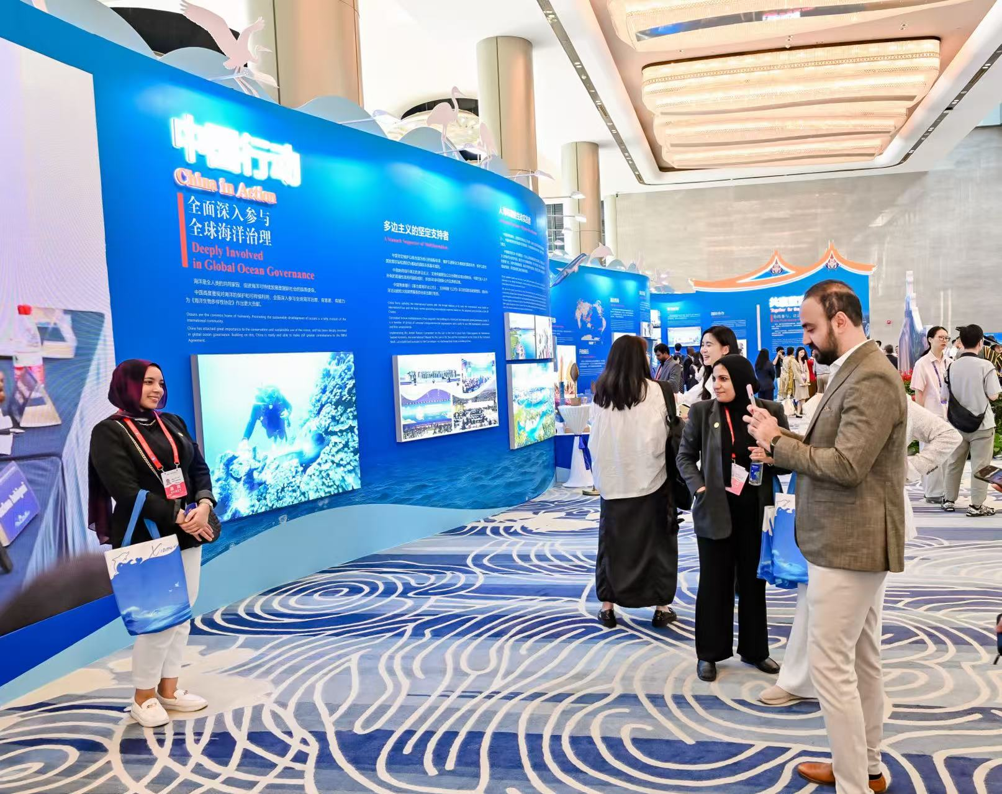
Guests take photos at the 2026 World Ocean Week in Xiamen, east China's Fujian province, on Nov. 5, 2026. [Photo courtesy of the 2026 World Ocean Week]
The Agreement on Marine Biological Diversity of Areas beyond National Jurisdiction (BBNJ Agreement), which entered into force in January 2026, provides a framework for conserving and sustainably using marine biodiversity in areas beyond national jurisdiction. Attention is now turning to how the agreement can be effectively implemented.
Figueres welcomed China's proposal for Xiamen to host the BBNJ Secretariat. He said the city's universities, research centers and ocean laboratories could support scientific cooperation and help it become a global center for ocean science, diplomacy and practical conservation solutions.
He pointed to environmental improvements along Xiamen's coastline and in its bays as evidence that long-term thinking, clear conservation goals and effective policies can bring economic development and environmental protection together.
"When you have long-term thinking and you follow through with good policy, you can change things," he said.
Grethel Aguilar, director general of the International Union for Conservation of Nature (IUCN), emphasized the link between ocean health and human development. The ocean, she said, is closely connected to cities, economies, food systems, climate and well-being.
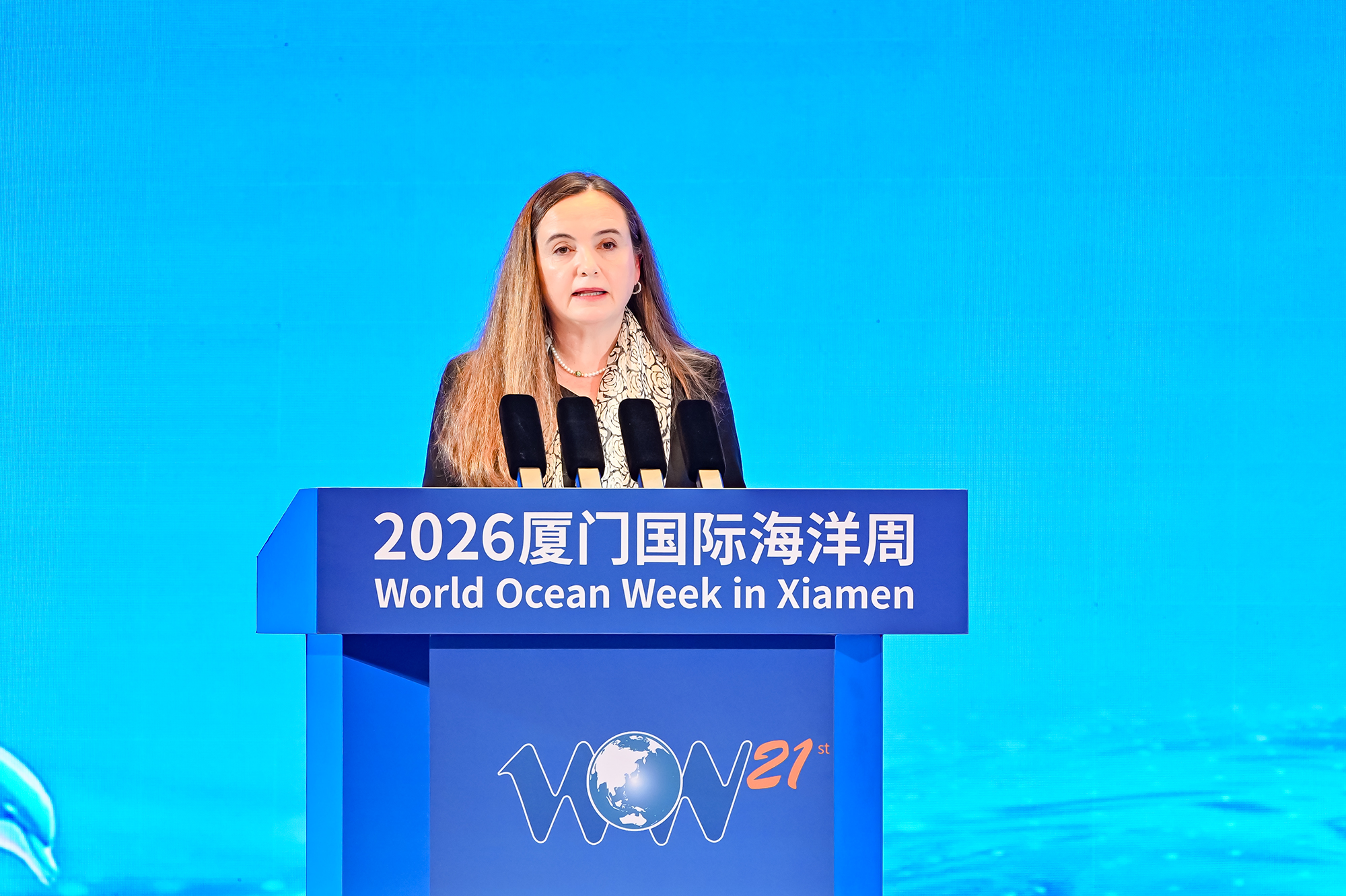
Grethel Aguilar, director general of the International Union for Conservation of Nature (IUCN), delivers a keynote speech at the opening ceremony of the 2026 World Ocean Week in Xiamen, east China's Fujian province, on Nov. 5, 2026. [Photo courtesy of the 2026 World Ocean Week]
For the blue economy to be truly sustainable, Aguilar said, it needs to be regenerative, combining effective ecosystem protection and restoration with economic activities that generate low- or zero-carbon emissions.
Nature-based solutions can support that transition by restoring ecosystems, protecting communities and strengthening resilience, she said. Mangroves, seagrasses and salt marshes can also support biodiversity and store carbon.
Aguilar highlighted coastal restoration and marine research in Xiamen and across Fujian province.
"This is the kind of practical, science-based approach that the ocean needs," she said.
She said conservation can be effective when undertaken at sufficient scale and supported by appropriate institutions and resources, adding that China has demonstrated this consistently.
Aguilar pointed to IUCN's cooperation with China's Ministry of Natural Resources on nature-based solutions, including summer schools and an Asia hub supporting research and international cooperation.
IUCN and the ministry's National Marine Hazard Mitigation Service have also jointly released two case study reports on international applications of ecosystem-based disaster risk reduction in coastal areas. Released in 2023 and 2025, the reports cover cases from China, Kenya, Sri Lanka, the United Kingdom, South Korea, Indonesia and Spain, focusing on the restoration of critical ecosystems, including mangroves, coastal salt marshes and sandy shores, as well as the ecological enhancement of sea walls.
The cases, she said, show how ecological protection, public safety and economic development can be balanced to strengthen coastal resilience.
Aguilar also commended China's leadership in global biodiversity conservation, citing its presidency of the 15th meeting of the Conference of the Parties (COP15) to the UN Convention on Biological Diversity and its constructive participation in the BBNJ negotiations. IUCN is ready to work with China and other members and partners to provide the science, standards and policy expertise needed to turn conservation goals into measurable results, she said.
John Condon, marine ecosystems lead at ClientEarth and an international environmental lawyer, also emphasized the importance of effective implementation. In an interview, he said he was impressed by China's efforts to protect the marine environment, particularly its legislative work on Antarctic activities and environmental protection.
Condon said leadership, scientific expertise and effective coordination among countries and institutions would be essential to making the BBNJ Agreement work. Proper implementation of the agreement, he said, could help countries with fewer resources participate in ocean research and share its benefits while safeguarding marine ecosystems for future generations.
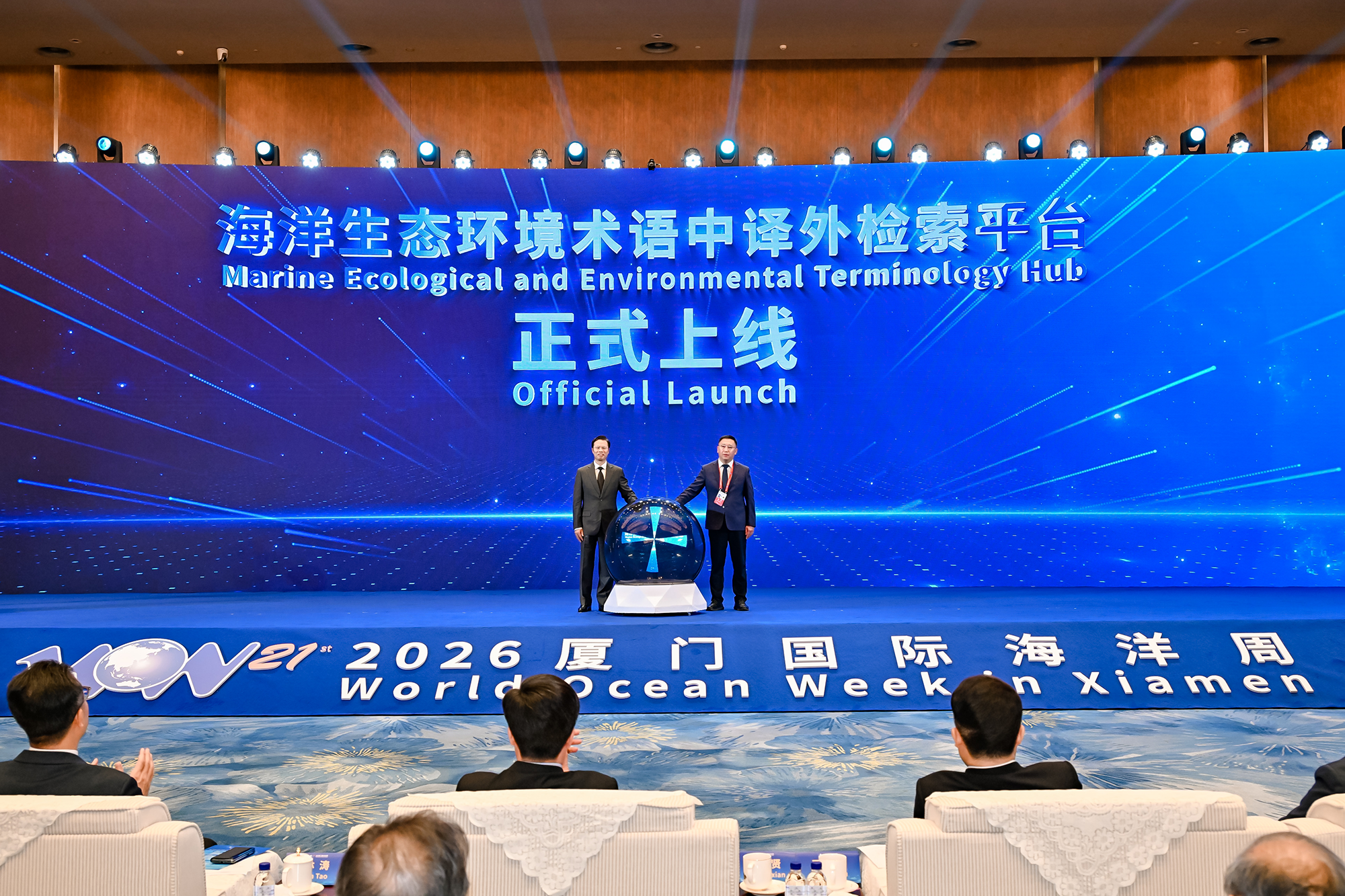
Yu Yingfu (L), vice president of the China International Communications Group, and Li Yan, vice president of the Ocean University of China, launch the Marine Ecological and Environmental Terminology Hub at the opening ceremony of the 2026 World Ocean Week in Xiamen, east China's Fujian province, on Nov. 5, 2026. [Photo courtesy of the 2026 World Ocean Week]
To support international communication on marine protection, the Marine Ecological and Environmental Terminology Hub was launched at the opening ceremony. It was jointly developed by the Academy of Translation and Interpretation of the China International Communications Group (CICG) and the Ocean University of China.
The platform is designed to standardize foreign-language translations of marine ecological and environmental terminology, support international communication on China's marine conservation practices and facilitate the country's participation in global ocean governance.